What Does BBQ Stand for? A Complete Guide to Meaning, History & Styles
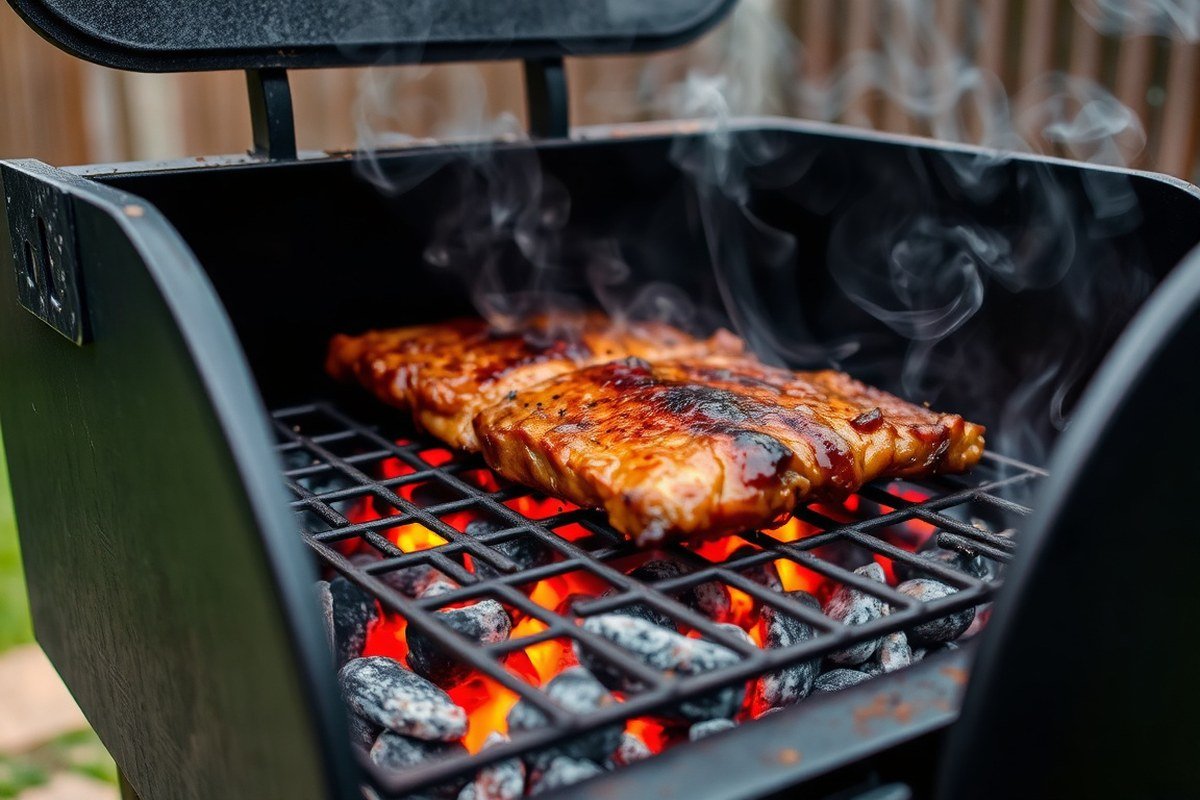
What does BBQ stand for? BBQ is short for barbecue and is best understood as an abbreviation rather than an acronym. It broadly refers to cooking techniques involving low, indirect heat and smoke, but the term also describes the equipment, the food, and even the social event.
Knowing that BBQ simply shortens barbecue helps clarify conversations and menus. Start by recognizing the context, whether someone means the cooking method, the food served, or the gathering.
Key Takeaways
- BBQ stands for barbecue, which is an abbreviation, not an acronym.
- Barbecue broadly means cooking with smoke and indirect heat, typically between 225°F and 300°F.
- BBQ can refer to the equipment used, the food itself, or the event centered around cooking outside.
- The term BBQ developed as a shortening of “barbeque,” which appeared in print by the mid-1950s.
- Understanding BBQ means distinguishing it from grilling, which uses direct high heat and shorter cook times.
- Many regional BBQ styles exist, each with its own flavor profile and cooking traditions.
What Does BBQ Stand for and Is It an Acronym?
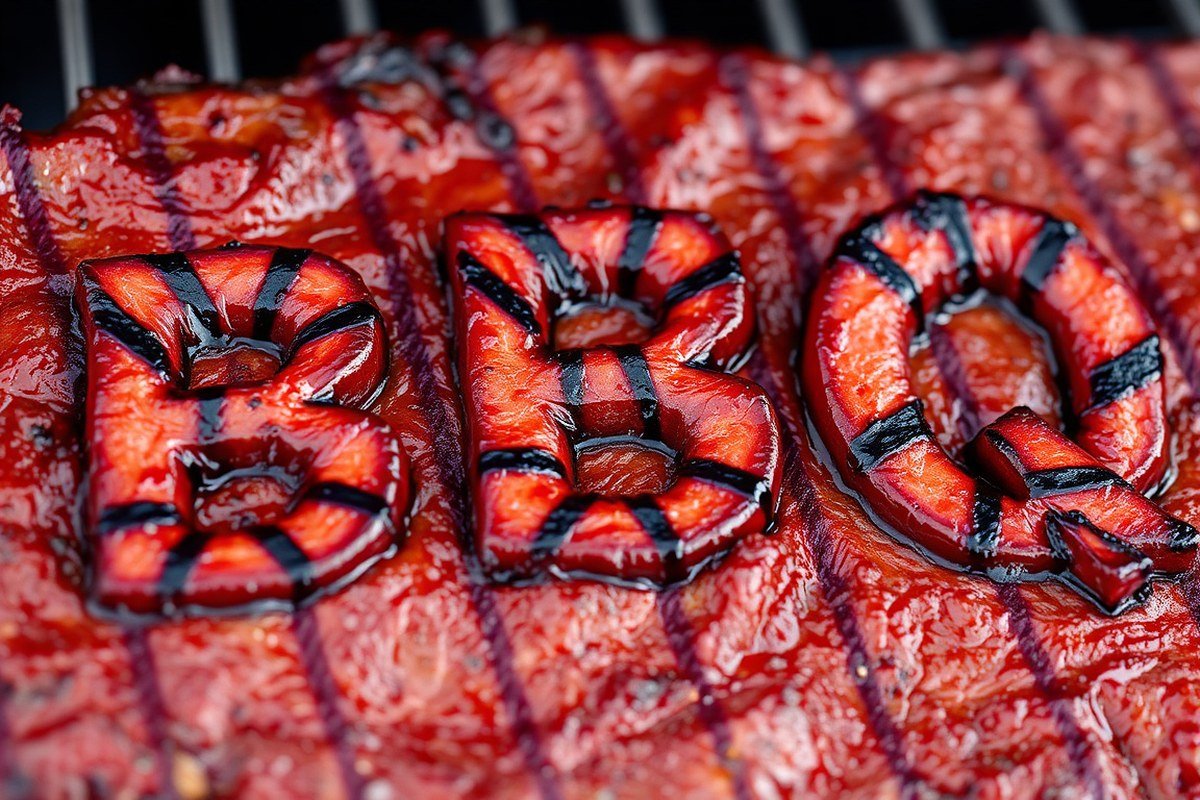
BBQ stands for barbecue, but it is not an acronym where each letter represents a separate word. Instead, BBQ is an abbreviation, a shortened form of the word barbecue used for convenience and space-saving, especially in menus, signage, and casual writing. Unlike acronyms such as NASA or FBI, the letters B-B-Q do not individually stand for anything specific.
This means you won’t find meanings like “Bar Beef Quarter” or “Bring Beer Quick” attached to BBQ; those are just playful backronyms people make up. The term barbecue itself refers to a cooking method involving slow cooking with indirect heat and smoke, the food prepared that way, the event where the food is served, and even the equipment used. BBQ, as an abbreviation, captures all those meanings without spelling them out. The abbreviation BBQ became popular in the 20th century, emerging from the longer word barbecue, which has roots tracing back through several languages over 500 years, from Caribbean Taíno through Spanish and French before becoming English “barbecue.” Using BBQ on menus and in advertisements made it easier to communicate quickly what was being offered, especially as outdoor cooking culture grew in the United States.
When you see BBQ in writing or speech, understand it as a neat way to say “barbecue,” nothing more complicated. It’s a practical clipped form used worldwide without changing the original word’s meaning. Since BBQ is simpler to write and read, it works well in casual settings but is not suitable for formal writing, where spelling out barbecue is preferred.
The Origin and Etymology of the Word ‘Barbecue’
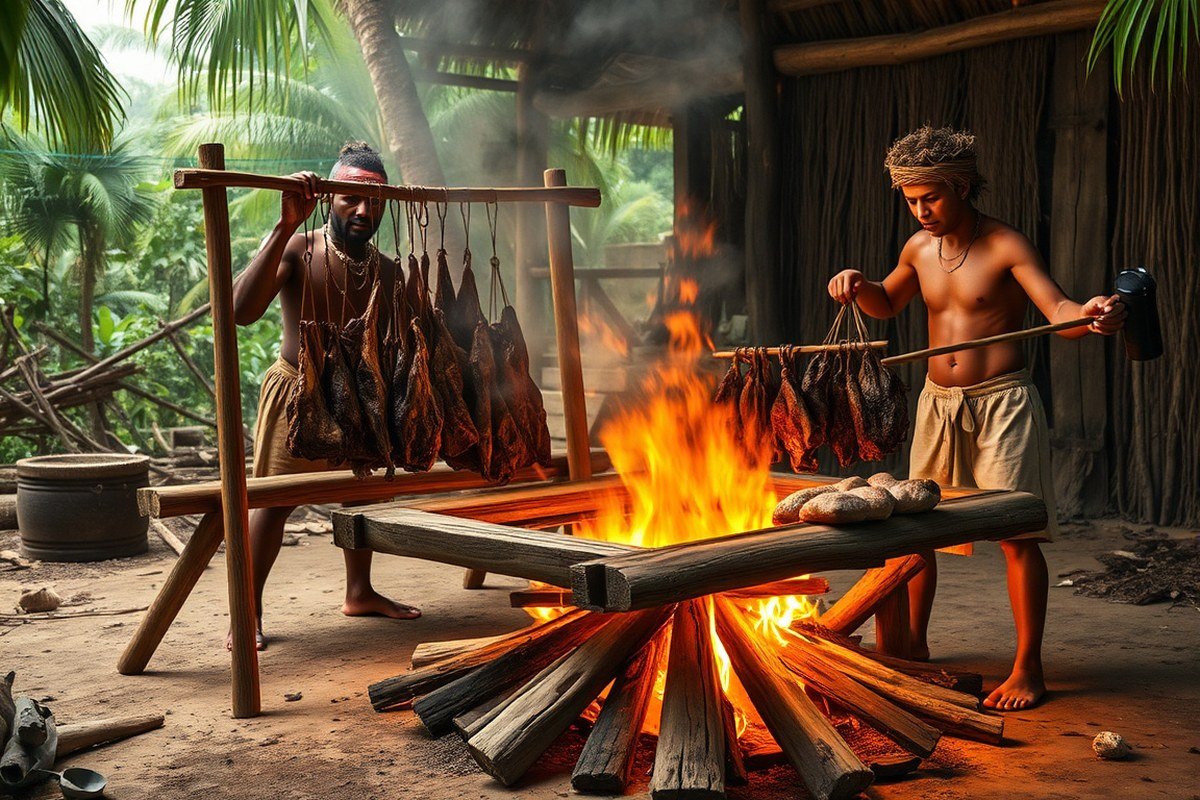
The word Barbecue traces its origin to the Caribbean Taíno people, where the term Barabicu described a wooden framework used for cooking and drying meat. Spanish explorers encountered this cooking method and word during their early 16th-century voyages. The first known written record of the term comes from Gonzalo Fernández de Oviedo y Valdés in 1526, who described it in his Historia General y Natural de las Indias. This early use documented both the word and the cooking technique observed in the West Indies.
The term Barbacoa comes from Spanish and spread through the Caribbean during colonial times, later moving into French as France colonized nearby areas. English speakers started using the word by the 1600s. The earliest known English use of “barbecue” is from around 1661 in Edmund Hickeringill’s Jamaica Viewed. By the early 18th century, the word was commonly used in America, with historical figures like George Washington attending “barbecues” as social events, not merely cooking methods.
This timeline shows how Barbecue evolved from a specific indigenous cooking device into a broader term for cooking meat over an open flame or smoke. The word’s journey from Taíno to Spanish, French, and English reflects the historical movement of cultures and food traditions through colonial expansion. Understanding this origin connects modern outdoor cooking back to its Caribbean roots and highlights how a practical framework for cooking transformed into a celebrated culinary tradition in English-speaking America.
Why Are There Different Spellings: BBQ, Barbeque, Bar-B-Que?
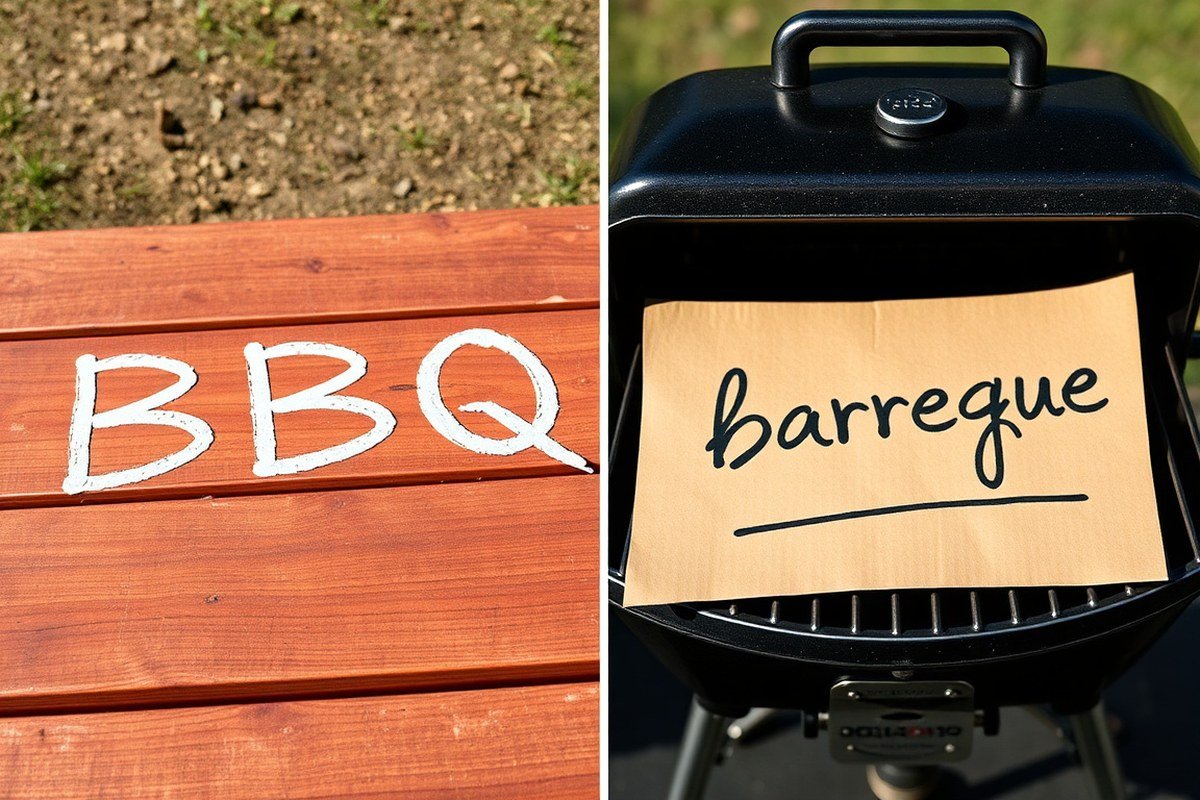
The different spellings of barbecue, such as “barbecue,” “barbeque,” and “Bar-B-Que”, mainly stem from historical, regional, and marketing influences rather than strict language rules. The spelling Barbecue is the standard form listed first in dictionaries and is considered the correct version for formal writing. Despite this, “barbeque” became popular because it looks closer to the abbreviation “BBQ,” which companies and restaurants favored for marketing and signage. The version “Bar-B-Que” often appears on restaurant signs due to its eye-catching, hyphenated format, even though it is less common in everyday writing.
The abbreviation BBQ first appeared widely as a convenient shortcut in advertising and informal contexts, especially in the 20th century. Its rise in use is linked to the growing popularity of barbecuing as a social and culinary activity in the American South, where slow-smoked meat over wood became a signature tradition. This cultural significance boosted the use of “BBQ” as a recognizable term in menus, events, and product packaging.
In daily life, “BBQ” is universally understood, making it practical for casual conversation or signage. However, in writing that requires precision or adherence to linguistic standards, “barbecue” remains the preferred spelling. “Barbeque” survives primarily because many food-related businesses adopted it, leading to a common misconception that it is the correct full spelling of the word. None of these spellings are technically wrong, but knowing the context helps you choose the most appropriate form for your needs.
The Difference Between BBQ, Grilling, and Smoking
Barbecue (BBQ), grilling, and smoking are three popular outdoor cooking methods that differ mainly in heat level, cooking time, and technique. BBQ involves Low and slow cooking at temperatures between 180°F and 250°F over indirect heat. The process typically lasts from 6 to 24 hours, allowing tough meat cuts to break down fully and absorb wood smoke, resulting in tender texture and deep smoky flavors.
In contrast, grilling uses direct, intense heat ranging from 400°F to over 600°F, cooking food quickly within minutes. This method suits cuts like steaks, burgers, and hot dogs, providing a charred exterior and juicy interior. The short cooking time preserves the fresh meat flavors rather than imparting smoke taste.
Smoking shares the low temperature approach with BBQ but focuses more on imparting smoke flavor over extended periods, typically between 6 and 24 hours. Cold smoking is an exception, it adds smoky flavor without actually cooking the food, meaning you need to cook the smoked product afterward for safety. Here’s a comparison to clarify:
| Method | Heat Level (°F) | Cooking Time | Technique | Typical Foods |
|---|---|---|---|---|
| BBQ | 180, 250 (low) | 6, 24 hours (slow) | Indirect heat, wood smoke | Brisket, pork shoulder, ribs |
| Grilling | 400, 600+ (high) | Few minutes (fast) | Direct heat, flame/grate contact | Steak, burgers, hot dogs |
| Smoking | 180, 250 (low) | 6, 24+ hours (slow) | Indirect heat, smoke focus | Pulled pork, salmon, cheese (cold-smoked) |
Choosing between them depends on the flavor and texture you want. BBQ breaks down collagen in cheap cuts, creating rich, gelatinous meat. Grilling highlights fresh meat flavors with a crisp outside. Smoking improve flavor complexity without always cooking the food fully, sometimes paired with other cooking steps.
The cost and effort differ too: BBQ demands more time, fuel, and temperature control, while grilling suits quick meals with minimal gear. Smoking falls in between but requires patience and smoker equipment. Each method creates distinct taste experiences tied to cultural traditions and specific culinary goals.
How Long and at What Temperatures Is BBQ Cooked?
Barbecue cooking typically involves low temperatures held over a long period of time to break down tough connective tissues in meats and develop deep flavors. The standard temperature range for traditional BBQ runs between 225°F and 275°F. At these temperatures, tougher cuts like brisket, pork shoulder, and ribs slowly tenderize over several hours, often between 4 to 16 hours depending on the size and type of meat. This method is known as Low-and-slow cooking.
Low-and-slow works by gently rendering fat and collagen without drying out the meat, producing a tender, juicy final product. Maintaining a consistent temperature is important to avoid overly tough or dry meat or flood the flavors with harsh smoke. Modern equipment like pellet smokers with electronic controls can help keep these temperatures stable.
Smoking is a key element of BBQ and exists in two main forms: Hot smoking and cold smoking. Hot smoking is done at 126°F to 176°F, which is close to the cooking temperature and both smokes and cooks the meat simultaneously. Cold smoking happens at 68°F to 86°F. At these lower temperatures, smoke flavor is imparted without cooking the meat, which can then be cooked later by another method. Cold smoking is often used for flavoring items like bacon and cheese rather than full BBQ cooks.
For most BBQ enthusiasts, aiming for an internal meat temperature around 195°F to 205°F signals that the connective tissues are fully rendered and the meat will be tender. Experienced cooks monitor both the smoker and meat temperature carefully throughout the cook. Typical BBQ cook times vary: smaller cuts may take 4 to 6 hours, pork shoulders and briskets often need 12 to 16 hours, and whole hogs can require 20 hours or more.
The Evolution of BBQ Equipment: From Open Pits to High-Tech Smokers
Barbecue equipment has come a long way from its origins in open pits dug into the ground. Traditional pits involve slow-cooking meat for many hours using indirect heat and smoke, often with natural wood or charcoal as fuel. This method remains popular in some southern U.S. Regions and parts of Mexico, where enclosed underground pits keep temperatures low and steady for 8 to 10 hours. These setups can demand patience and skill to maintain consistent heat, but they deliver deep smoky flavors prized by barbecue enthusiasts.
The next big step was the introduction of charcoal grills, which offer more control over cooking temperature and convenience. Charcoal kettles and barrel-style grills, priced as low as $80, let you adjust airflow to manage heat between about 225°F and 450°F. You can arrange charcoal for direct or indirect cooking, adapting techniques for smoking or grilling. These grills are versatile and accessible for backyard cooks, enabling quality barbecue without a large pit.
Modern advancements include electric and pellet smokers that use digital controls for precise temperature and smoke level management. Pellet smokers cost between $500 and $5,000 depending on size and features. They feed wood pellets automatically and maintain stable cooking temperatures, often between 180°F and 275°F, important for long cooks. Many models now include WiFi connectivity, allowing you to monitor and adjust settings from a smartphone app. This technology reduces guesswork and lets you focus on other tasks while your meat smokes consistently.
Choosing the right equipment depends on your cooking style and budget. Pits offer authenticity and traditional flavor but require experience. Charcoal grills balance control and cost, while electric and pellet smokers provide ease and precision aided by modern tech. Understanding how to manage airflow, fuel, and temperature in each type ensures better results and less chance of dried-out or undercooked meat during your barbecue sessions.
Popular Regional BBQ Styles and Their Signature Techniques
American barbecue consists of four major regional styles, each with distinct meats, sauces, and cooking methods. Texas BBQ focuses on beef, especially brisket, cooked low and slow over post oak wood. Its sauce is usually dry, relying on seasoning blends like salt, pepper, and garlic rather than a heavy sauce. Kansas City BBQ is known for its broad use of meats, from pork ribs to beef and chicken, all covered in a thick, sweet tomato-based sauce. This style often uses hickory wood for smoking.
Carolina BBQ splits into two main types: Eastern Carolina uses the whole hog, smoked over hardwood such as hickory, with a vinegar and pepper-based sauce while Western Carolina style focuses on pork shoulders served with a tangy tomato-vinegar sauce. Memphis BBQ largely centers on pork ribs and pulled pork, smoked slowly over fruitwoods like apple or cherry. The Memphis style offers both dry-rubbed ribs and sauced ribs with a thinner tomato-based sauce, often with a hint of sweetness and spice.
These regional approaches differ not only in their choice of meat but also in the wood used for smoking, cooking temperatures (typically ranging from 225°F to 275°F), and sauce thickness or tanginess. Good results mean tender, smoky meat with the right balance of spice and sweetness in the sauce, while common issues include dryness from overcooking or overpowering smoke flavor.
Internationally, related traditions include Mexican Barbacoa, originating from the Taino word for slow-cooked meat wrapped and cooked in a pit. Barbacoa uses beef, lamb, or goat, often steamed in a pit covered with maguey leaves. Korean BBQ, though different in flavor and technique, has influenced American BBQ with its emphasis on marinated meats cooked quickly over hot grills, showing the global reach of BBQ culture that blends slow-smoking with direct grilling methods.
| Region | Meat | Cooking Method | Wood Used | Sauce Style |
|---|---|---|---|---|
| Texas | Beef Brisket | Low and slow smoking, 225°F, 275°F | Post Oak | Dry rub, minimal sauce |
| Kansas City | Pork, Beef, Chicken | Slow smoking | Hickory | Thick, sweet tomato-based |
| Carolina (Eastern) | Whole Hog | Smoking over hardwood | Hickory | Vinegar and pepper-based |
| Carolina (Western) | Pork Shoulder | Smoking over hardwood | Hickory | Tomato-vinegar tangy sauce |
| Memphis | Pork Ribs, Pulled Pork | Slow smoking | Apple, Cherry | Dry rub or thin tomato-based |
| Mexican Barbacoa | Beef, Lamb, Goat | Pit steaming under maguey leaves | Typically natural pit wood | No sauce, seasoned with herbs |
| Korean BBQ | Beef, Pork, Chicken | Quick grilling over hot coals | Charcoal or gas | Marinated, no sauce applied after grilling |
The Cultural and Social Importance of BBQ
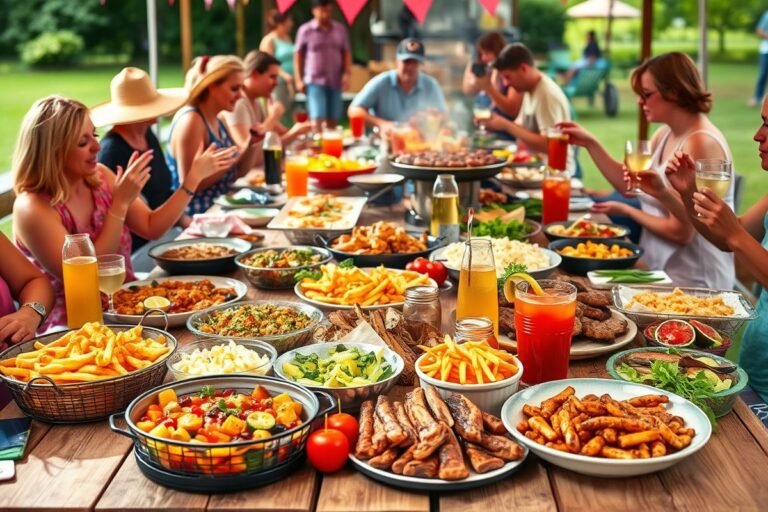
Barbecue serves as much more than a cooking technique; it stands as a powerful social and cultural event that binds communities and expresses regional identities. In the American South, for instance, BBQ is deeply woven into community life and history. It’s a social institution rooted in slow cooking over wood fire, not gas, which creates a rich flavor and a shared experience that lasts for hours, sometimes all day and into the night. These gatherings often mark important celebrations, whether political campaigns in the 19th century, church fundraisers after natural disasters, or simple family Sundays. In each case, barbecue provides a space for connection, storytelling, and cultural expression.
Communities celebrate BBQ by hosting events that bring people together physically and emotionally. Setting up a pit and cooking low and slow, usually between 225°F and 275°F for several hours, requires patience and care. Often, BBQ events emphasize tradition, with recipes and methods passed down through generations, making the act of cooking itself a tribute to heritage. Good results come from respecting these methods, like maintaining steady temperature and using the proper wood, key to achieving authentic smoke flavor that defines the event.
In places like Argentina, the asado centers around beef and highlights a communal grilling style that serves as a social marker and a national tradition. The UK’s use of “barbecue” covers any outdoor cooking, showing cultural variation in terms but sharing the same communal spirit. Whether you tend a family smoker or gather around a grill, BBQ embodies a ritual of community, memory, and identity that has evolved over at least five centuries and across continents. This makes BBQ a meaningful social practice, where cooking food becomes an act of cultural preservation and celebration.
Common BBQ Mistakes and How to Fix Them
One common mistake beginners make is cooking meat too fast or at temperatures that are too high. BBQ relies on low-and-slow heat, usually between 225°F and 275°F, to break down tough cuts of meat without drying them out. Cooking brisket or ribs over direct heat or pushing the temperature above 300°F risks burnt exterior and a tough interior. Use a reliable thermometer to keep the smoker or grill steady and avoid temperature spikes.
Another error is failing to monitor internal meat temperature properly. Relying on cooking time alone can lead to undercooked or overcooked results. Insert a meat thermometer into the thickest part of the cut, avoiding bone or fat. For example, pork shoulder is done around 195°F to 205°F when it becomes tender enough to pull, while brisket is often pulled at about 203°F. Check temperatures regularly during the last hour of cooking to ensure prime doneness.
Starting with meat that’s too cold or skipping resting can also harm BBQ results. Let steaks, ribs, or larger cuts sit at room temperature for 30 to 60 minutes before cooking. This helps them cook evenly. After cooking, rest the meat covered loosely with foil for 20 to 30 minutes to let juices redistribute. Cutting too soon causes moisture loss and dry meat.
Neglecting the smoker’s moisture level is another rookie mistake. Maintaining a water pan inside the smoker provides humidity that keeps the meat from drying out during long cooks. Refill the water as needed every hour or two. Without steam, the meat’s surface can harden, making pulling or slicing difficult.
Using appropriate equipment and keeping it steady matters more than many realize. A sturdy grill or smoker stand prevents tipping or heat loss due to instability. Invest in a tested, heavy-duty stand that fits your smoker model. This stability helps maintain consistent heat and smoke flow essential to authentic barbecue flavor.
How to Monitor and Control Your BBQ Cooking for Consistent Results
Using a reliable thermometer is the best way to track your BBQ temperature accurately. Insert a probe into the thickest part of the meat, away from bone and fat, to get the true internal temperature. For whole briskets or pork shoulders, aim for roughly 195°F to 205°F for tenderness. Many BBQ fans use dual-probe thermometers, one for the meat and one to monitor the smoker’s ambient temperature. Digital thermometers with alert functions let you know if temperatures drop or rise unexpectedly.
Remote monitoring tools have changed BBQ cooking. WiFi-enabled thermometer controllers let you check your cook from anywhere in your house or even farther away through an app on your phone. These systems often cost $100 to $300 but save you time and stress, especially during long cooks that stretch over 12 hours. They also enable you to make adjustments without opening the smoker and losing heat.
Controlling heat and smoke depends on your smoker type. With an offset smoker, adjust the fire by adding or pulling wood and managing the air vents. Opening vents increases oxygen, ramping up the fire and temperature, while closing them lowers the heat but risks smoke buildup, which can cause bitter flavours. For pellet or electric smokers, you can usually use a dial or app controls to set precise temperatures. Adding wood chunks directly or through a smoker box keeps smoke flavour consistent.
For beginners, start by maintaining a steady temperature between 225°F to 275°F for most barbecue meats. Use small chunks of hardwood like oak, hickory, or pecan for a clean smoke flavour lasting 30 to 90 minutes per chunk, replacing as needed. Pay attention to smoke colour: thin, blue smoke is ideal. Thick, white smoke means you need to adjust airflow or reduce wood to avoid off flavours.
Your First Steps: A Quick-Start BBQ Plan
Get started with BBQ by following these simple steps, designed to build your skills and confidence over time.
- Before you start: Choose the right cut of meat based on the BBQ style you want to try (e.g., pork shoulder for slow smoking). Check that your smoker or grill reaches and holds consistent temperatures, ideally between 225°F and 275°F for smoking.
- Day 1: Prep your meat with a dry rub or marinade according to your chosen recipe. If your rub has herbs or sugars, note that it should create a flavorful crust by cook time.
- Week 1: Practice maintaining steady heat by cooking at a lower temperature and using a thermometer to monitor both smoker and meat temperature. Success means your meat temperature rises steadily without major heat fluctuations.
- Week 2: Try your first full low-and-slow BBQ session, cooking for several hours to develop tender results. You’ll know it worked when the meat is soft and easy to pull apart.
- Week 3: Experiment with different wood types for smoking to find flavors you like. Compare results and note which wood pairs best with your meat.
- Week 4: Host a small BBQ gathering to test your technique and timing in a real setting. Feedback from friends will help confirm if your BBQ hits the mark or needs adjustments.
- After 1 month: Keep refining your temperature control and seasoning skills. Consistency in these areas is key to great BBQ, so track your times and temps for future improvement.
Frequently Asked Questions
What Does BBQ Stand For?
BBQ is an abbreviation of barbecue and does not stand for a phrase or acronym. It’s simply a shorter way to say barbecue, used mainly in writing and signs for convenience.
Is BBQ an Acronym or Just a Shortened Word?
BBQ is a shortened version of the word barbecue rather than an acronym since it does not represent a set of initials or separate terms.
Why Do People Say BBQ Instead of Barbecue?
People use BBQ to save space on menus, signs, or packaging. It makes the word quicker to read and write but means the same thing.
Has BBQ Always Stood for the Same Thing?
Yes, BBQ has consistently been a shortened form of barbecue, not representing any other phrase or slogan.
Does BBQ Refer Only to Grilled Food?
BBQ usually means cooking with low heat and smoke, not just grilling directly over flames.
Key Points to Remember
BBQ stands for a cooking method focused on low-temperature, slow cooking often with smoke to develop deep flavors. The word itself comes from Indigenous Caribbean languages and evolved through various spellings and regional styles. Your next step is to pick one regional style that appeals to you and try smoking a small cut of meat to experience authentic BBQ firsthand.